In today’s digital-driven marketplace, product authenticity is one of the most critical concerns for both consumers and manufacturers. Counterfeit goods account for nearly 8–9% of global trade, costing brands billions in revenue loss while eroding consumer trust. To combat this growing problem, companies are adopting genuine product authentication message UI a secure and user-friendly interface designed to verify a product’s legitimacy instantly.
This article explores the concept, installation, and benefits of genuine product authentication message UI, along with its connection to authentication services UI on iPhone and the role of QR codes in product verification.
What is Genuine Product Authentication Message UI?
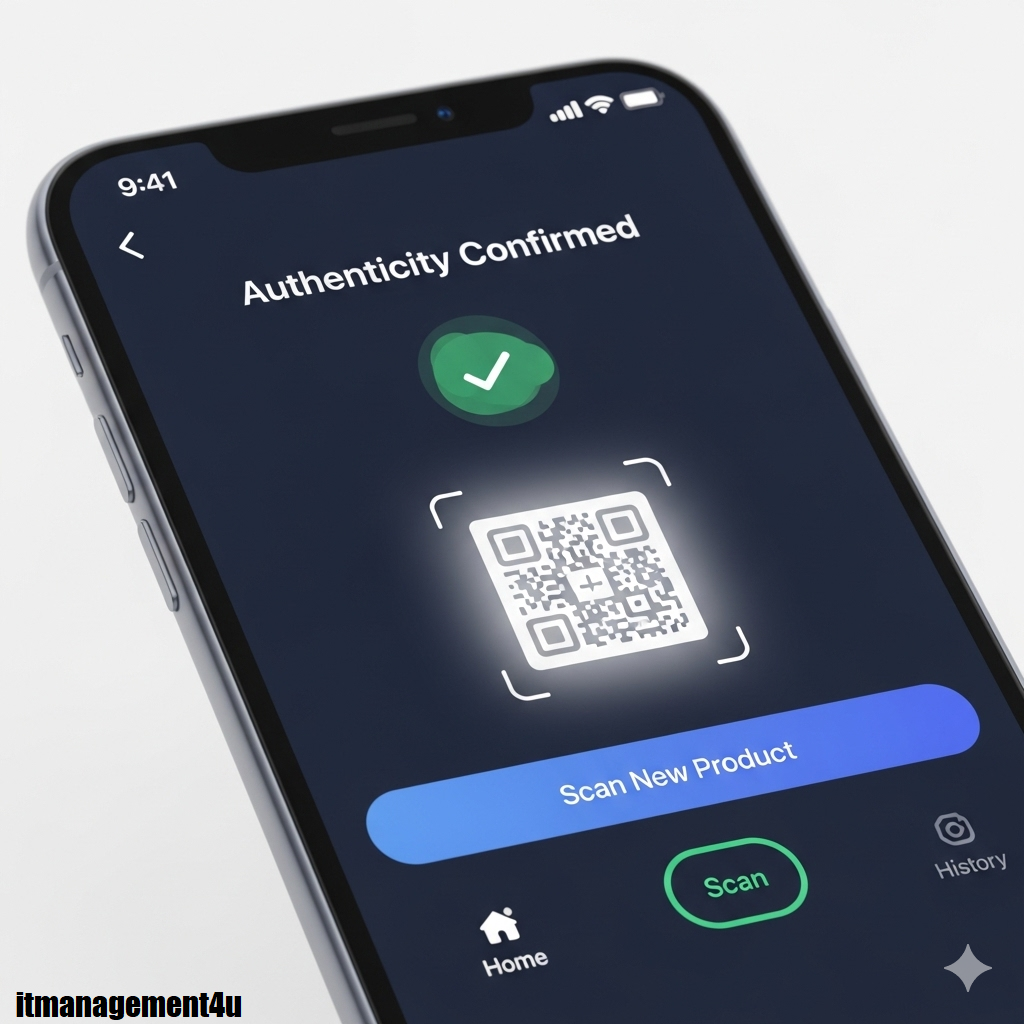
The Genuine Product Authentication Message UI is a user interface system designed to let consumers instantly verify if the product they purchased is authentic.
It activates after scanning a unique identifier such as a QR code, barcode, or hologram on the product’s packaging.
✅ Genuine Product
A green checkmark or “Genuine Product” message confirms authenticity, giving buyers confidence.
❌ Counterfeit Alert
A red “X” or warning indicates a counterfeit or suspicious product, helping consumers avoid fraud.
⚠️ Reused Code
A notification alerts when a code has been scanned before, raising concerns of possible counterfeiting.
This interactive system not only boosts consumer security but also helps brands monitor and reduce counterfeit distribution.
How to Use Genuine Product Authentication Message UI
The process of using genuine product authentication message UI is intentionally simple and user-friendly. It involves the following steps:
Locate the Unique Identifier
- On the product packaging, users will find a QR code or serialized code placed by the manufacturer.
Open the Scanner Interface
- The authentication app provides a camera-based scanner UI that guides users to align the code properly.
Scan the Code
- Once scanned, the app processes the information using a secure server or local database.
Receive Authentication Results
- Authentic Product: Verified with a green checkmark and product details.
- Counterfeit: Marked with a red warning sign.
- Previously Scanned Code: Alerts the user about possible unauthorized resale.
Actionable Options
Users can:
- Report suspicious activity
- Contact customer support
- Access more product details
This flow makes product authentication seamless and accessible to every consumer.
How to Install Genuine Product Authentication Message UI

Installation steps may vary depending on the brand and platform.
The process typically follows these stages:
1. Download the Authentication App
Official brand apps can be downloaded from the App Store (iOS) or Google Play Store (Android).
2. Enable Camera Access
Grant the app permission to use your phone’s camera to scan QR codes and barcodes.
3. Update Database Access
The UI links with the brand’s secure database to check whether the product is genuine or counterfeit.
4. Integration for Brands
Developers can integrate authentication APIs into their own apps, ensuring real-time verification results for customers.
By following these steps, both consumers and brands can effectively use the authentication UI to ensure product trust and transparency.
Benefits of Genuine Product Authentication Message UI
The adoption of a genuine product authentication UI delivers powerful advantages for both consumers and manufacturers.
Enhanced Consumer Trust
Shoppers gain instant confidence by confirming whether a product is genuine before purchase.
Brand Protection
Helps companies prevent counterfeiting and safeguard long-term brand reputation.
Supply Chain Transparency
Offers visibility into product origins, shipping routes, and sales channels.
User-Friendly Experience
Simple scanning and clear authentication results improve customer satisfaction.
Data Insights for Brands
Companies gain real-time intelligence on counterfeit attempts and consumer behavior.
Offline & Online Functionality
Offline checks ensure quick verification, while online access delivers comprehensive data.
What is Authentication Services UI on iPhone?
On iPhones, Authentication Services UI refers to the built-in framework that manages secure login and authentication processes.
For product verification apps, this provides both security and consistency.
Secure QR Scanning
Apps integrated with iOS authentication services allow users to safely scan QR codes for product verification.
Consistent UI
Ensures authentication messages look and feel the same across different apps, reducing confusion for users.
Trusted Environment
Provides a secure, system-level environment where users can trust the integrity of results.
Enhanced Usability
Native iOS integration boosts both security and ease of use, making iPhone a reliable platform for authentication apps.
Product Authentication Using QR Codes: Combating Counterfeiting
QR codes have grow to be one of the most effective gear in product authentication structures. Unlike conventional barcodes, which preserve confined data, 2D QR codes can keep encrypted product statistics.
Key benefits of the use of QR codes encompass:
- Higher Data Capacity: More product information can be stored.
- Encryption Capabilities: Protects in opposition to unauthorized duplication.
- Fast Scanning: Quick and dependable authentication in seconds.
- Versatility: Can be used throughout packaging, virtual receipts, and guarantee cards.
Manufacturers are adopting encrypted QR codes, combined with cryptographic strategies like DES (Data Encryption Standard), to stable their deliver chain. This method reduces encoding and decoding complexity even as keeping accuracy.
Key UI Elements of Genuine Product Authentication Message Systems
A successful authentication UI should be simple, intuitive, and secure.
These core elements define its effectiveness:
Scanner Interface
A clear, camera-based layout that enables quick and easy QR code scanning.
Scanning Feedback
Provides instant audio or visual confirmation when a code is successfully read.
Authentication Results
Displays clear results—whether the product is genuine, counterfeit, or previously scanned.
Actionable Options
Includes quick buttons for reporting counterfeit cases or contacting customer support.
Offline & Online Modes
Supports offline verification for basic checks and online mode for real-time brand authentication.
Design Principles for Authentication UI
The effectiveness of genuine product authentication message UI depends on strong design principles:
-
Simplicity: Minimal steps for verification.
-
Clarity: Clear color-coded indicators (green for authentic, red for counterfeit).
-
Guidance: Step-by-step instructions for first-time users.
-
Consistency: Branding elements align with the manufacturer’s identity.
-
Trust: Secure data handling to ensure reliable results.
Conclusion
The upward thrust of counterfeit items demands a strong product authentication system that prioritizes safety, readability, and believe. The genuine product authentication message UI combines era and user-targeted layout to create a continuing verification method. By leveraging QR codes, cryptographic encryption, and intuitive UI layout, manufacturers can protect their supply chain even as giving consumers self assurance in their purchases.
For groups and users alike, adopting these systems is no longer non-obligatory it’s far essential to maintaining credibility in a aggressive marketplace.