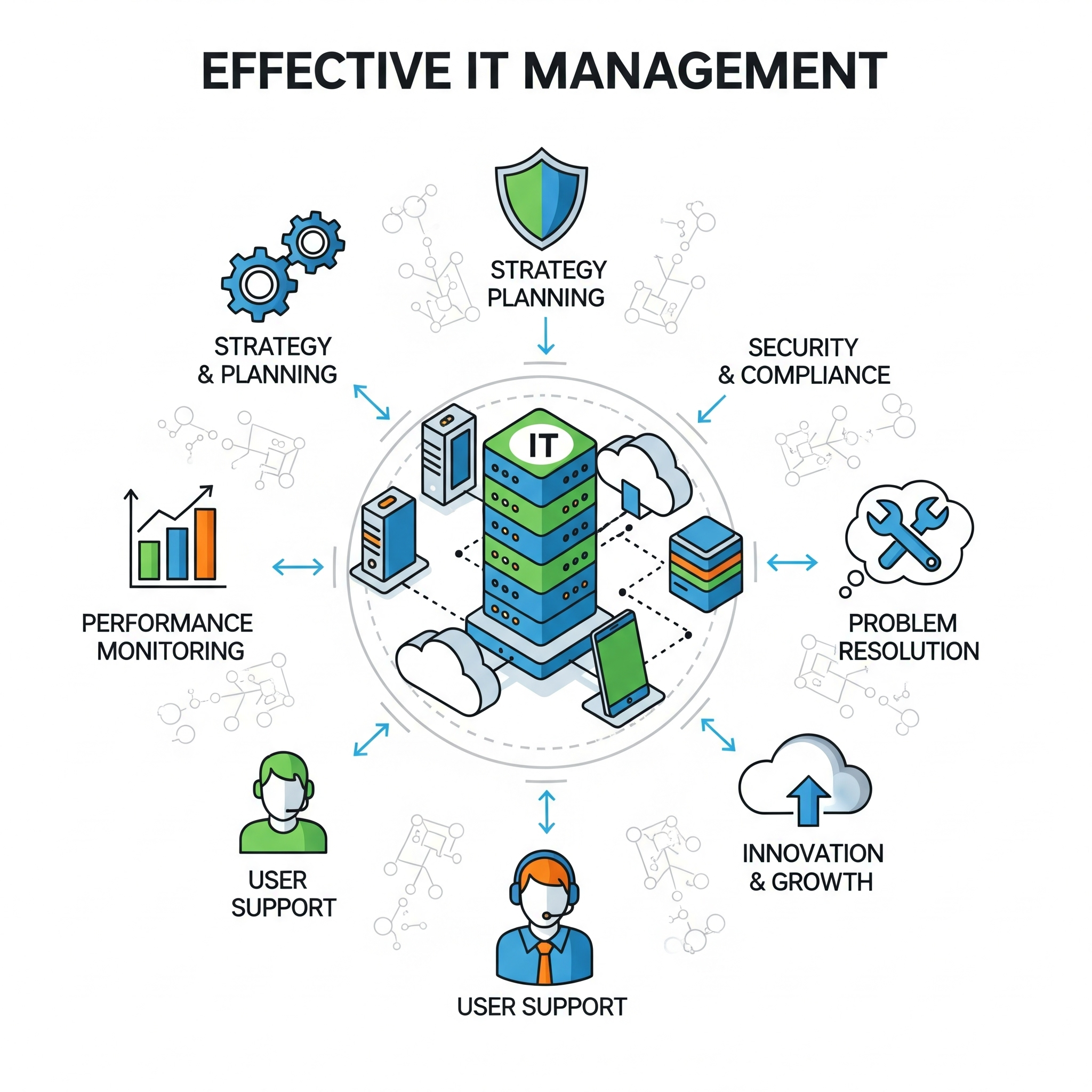
In today’s speedy-paced virtual surroundings, effective IT management is essential for groups aiming to attain lengthy-time period success. Businesses that align their IT techniques with company goals not best improve efficiency but also foster innovation, limit risks, and preserve a aggressive part. This article explores complete techniques that permit agencies to grasp IT control, from strategic making plans and execution to operational excellence and continuous development.
The Importance of Strategic IT Management
Every modern-day enterprise is predicated on IT structures to maintain operations, hook up with customers, and power innovation. IT control serves because the backbone of these strategies, ensuring that technology investments are aligned with the business enterprise’s ordinary project. Without clean targets and dependent making plans, IT tasks can lead to wasted assets, inefficiencies, and overlooked possibilities.
By integrating IT into business strategy, organizations can:
- Enhance decision-making with real-time records.
- Reduce operational fees via automation.
- Improve customer reviews through digital answers.
- Strengthen security and resilience in opposition to cyber threats.
- Create scalable structures to assist increase.
Strategic Planning and Execution in IT Management
1. Define Clear Objectives
The first step in effective IT management is setting measurable and realistic objectives that directly support business goals. For example, if a company seeks to expand globally, IT objectives might include deploying scalable cloud infrastructure and enhancing cybersecurity measures for international compliance. Clear objectives ensure that IT resources are not wasted on projects that lack business value.
2. Develop Detailed Project Plans
Well-defined plans are critical to the success of IT projects. This involves:
-
Establishing project timelines.
-
Assigning specific responsibilities.
-
Allocating necessary resources.
-
Identifying dependencies and constraints.
Comprehensive project planning also includes anticipating potential risks and outlining strategies for mitigation. By defining every element in advance, IT leaders can ensure smoother execution and better alignment with corporate priorities.
3. Assemble the Right Team
Building a skilled IT team is fundamental. Success depends on not only technical expertise but also strong leadership and collaboration. IT leaders should recruit talent that is adaptable, innovative, and committed to continuous learning. Moreover, empowering teams with clear communication and decision-making authority fosters accountability and accelerates project success.
4. Manage Resources Effectively
Resources such as budget, personnel, and technology must be strategically allocated to maximize efficiency. Overspending or underutilizing resources can derail even the best IT plans. Organizations should implement resource management tools that provide visibility into project costs, workforce utilization, and technology investments.
5. Conduct Risk Management
Proactive risk management is essential. IT projects face challenges such as data breaches, system failures, and vendor delays. Developing mitigation strategies—such as backup systems, contingency budgets, and robust cybersecurity policies—ensures projects can withstand disruptions without derailing business goals.
Operational Excellence in IT Management
1. Foster Effective Communication
Communication is the foundation of successful IT projects. By establishing transparent communication channels between IT teams, stakeholders, and executives, organizations ensure that all parties are aligned. Tools such as project management platforms, status reports, and regular meetings facilitate collaboration and accountability.
2. Monitor and Adjust
Tracking project performance is vital. Key performance indicators (KPIs) such as system uptime, incident response times, and budget adherence help IT leaders measure progress. When deviations occur, leaders must act quickly to adjust strategies, ensuring projects stay on track.
3. Embrace Agility and Adaptability
The business environment is constantly changing. Companies that adopt agile methodologies gain flexibility to respond quickly to evolving market conditions and unexpected challenges. Agile IT management encourages iterative progress, rapid feedback, and continuous improvement, allowing organizations to remain competitive.
4. Automate and Streamline
Automation is one of the most powerful tools in IT management. By automating repetitive tasks such as software updates, system monitoring, and reporting, organizations can:
-
Save time and reduce errors.
-
Improve data accuracy.
-
Free up teams for strategic initiatives.
Streamlined workflows also enhance overall productivity and cost-efficiency.
5. Promote a Culture of Continuous Improvement
Organizations must encourage a growth mindset within IT teams. By fostering innovation, promoting training, and embracing feedback, IT leaders can create a culture of continuous improvement. This ensures that technology strategies evolve alongside business needs and market changes.
Navigating IT Project Management: Strategies for Success
Establish Clear Governance Structures
Strong governance ensures accountability and provides a framework for decision-making. Governance structures define roles, responsibilities, and escalation procedures, minimizing ambiguity and confusion.
Leverage Metrics for Performance Tracking
Measurable outcomes are the backbone of IT project management. Common metrics include:
-
Project completion rate.
-
Budget variance.
-
System performance benchmarks.
-
User adoption levels.
By leveraging metrics, IT leaders can make data-driven decisions that improve project outcomes.
Focus on Stakeholder Engagement
Stakeholder involvement is critical to success. Early engagement ensures alignment of expectations and increases the likelihood of project adoption. Regular updates, demos, and feedback sessions keep stakeholders invested throughout the process.
Utilize Advanced Tools and Technologies
Modern project management tools—such as AI-driven analytics, cloud-based collaboration platforms, and DevOps pipelines—enhance productivity and streamline operations. Leveraging these technologies allows organizations to manage complexity while maintaining efficiency.
Plan for Scalability and Future Growth
A successful IT project is not just about meeting current needs; it must also support future expansion. Designing scalable solutions ensures that IT investments remain relevant and valuable as the organization grows.
Conclusion: The Future of IT Management
Effective IT Management is not optional—it’s far a necessity for survival and increase in these days’s aggressive panorama. By defining clean goals, creating distinct plans, assembling the proper group, and fostering continuous improvement, corporations can remodel IT into a effective driver of fulfillment. Furthermore, operational excellence, agile adaptability, and proactive risk control ensure that IT techniques remain resilient and destiny-equipped.
Organizations that commit to those ideas will not most effective optimize their era investments but also benefit a sustainable aggressive benefit in the virtual age.
For More Information Visit IT Management 4u!