Introduction to UML Diagrams
The Unified Modeling Language (UML) is a standardized seen language utilized in software program software engineering to specify, visualize, assemble, and document the artifacts of software program systems. Developed below the Object Management Group (OMG), the modern version is UML 2.Five, which defines 14 reputable diagram sorts. These diagrams are essential for talking complex ideas among developers, architects, stakeholders, and businesses.
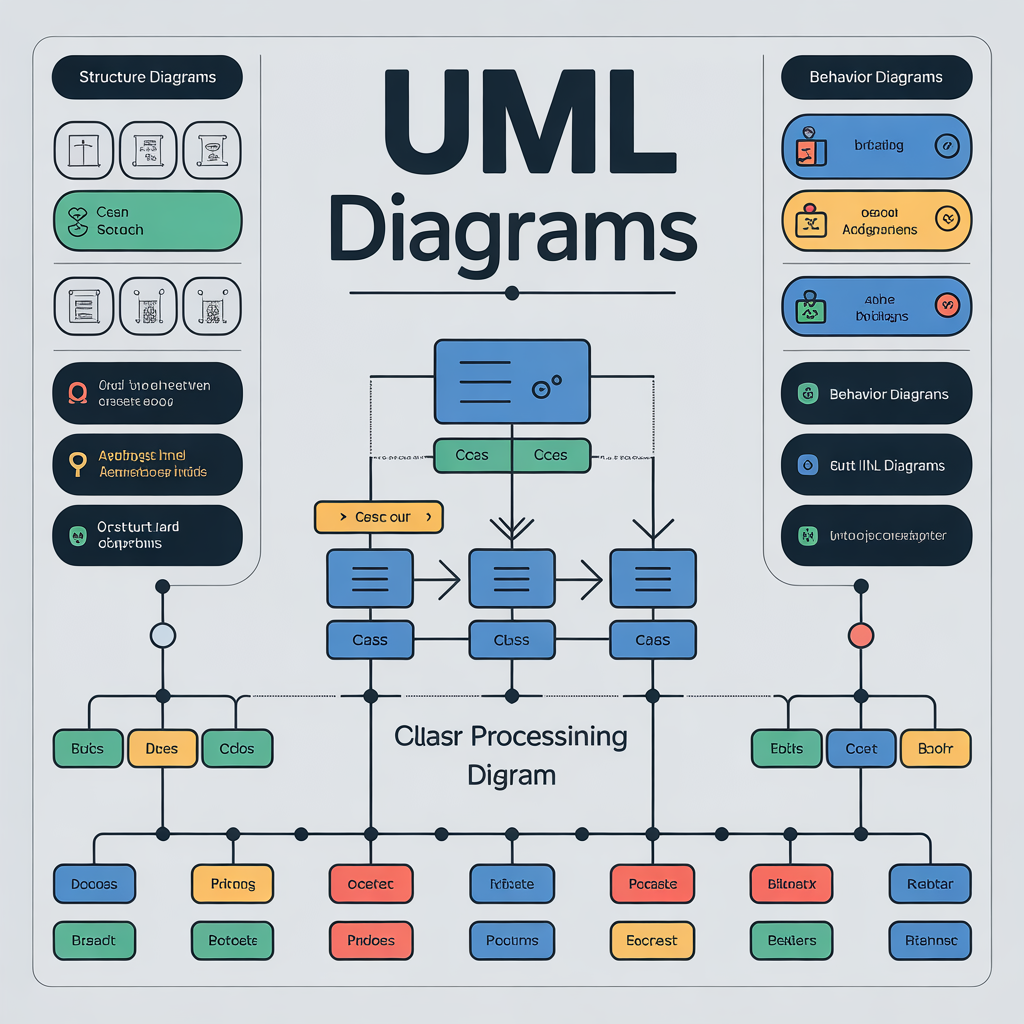
UML diagrams are divided into two number one categories:
- Structure diagrams: Focus at the static components of a machine, showing factors and their relationships.
Behavior diagrams: Illustrate the dynamic conduct, along with interactions and nation adjustments through the years.
By using UML diagrams, groups can lessen ambiguities, enhance collaboration, and create clear blueprints for implementation. Popular equipment support computerized era and templating for green diagramming.


A normal UML class diagram instance showing instructions, attributes, and relationships in an order processing machine.
Key Highlights of UML Diagrams
Here are the principle factors approximately UML diagrams:
There are 14 fashionable UML diagram kinds as defined in UML 2.5.
- Structure diagrams (7 sorts): Emphasize what the system includes.
- Behavior diagrams (7 kinds): Focus on what occurs inside the machine over time.
UML supports mixing factors throughout diagram types for flexibility.
Widely utilized in item-orientated layout, agile tasks, and agency architecture.
Benefits include advanced verbal exchange, higher making plans, and simpler upkeep.
Categories of UML Diagrams
Structure Diagrams
These diagrams constitute the static structure of the system.
Class Diagram: The most not unusual UML diagram, showing instructions, attributes, operations, and relationships like inheritance and associations.


Object Diagram: A image of instances of classes at a selected moment.
Component Diagram: Depicts software program additives and their dependencies..


Composite Structure Diagram: Shows inner shape of a category and collaborations.
Deployment Diagram: Illustrates hardware nodes and software program deployment.


Package Diagram: Organizes factors into companies.
Profile Diagram: Extends UML for particular domain names.
Behavior Diagrams
These capture dynamic factors and interactions.
Use Case Diagram: Shows actors and device functionalities from a person’s angle.


A use case diagram example for a easy system with actors and use cases.
Activity Diagram: Models workflows, tactics, and commercial enterprise policies, similar to flowcharts however extra powerful.


State Machine Diagram: Depicts states of an item and transitions caused by way of events.


Sequence Diagram: Shows item interactions arranged in time collection.


Communication Diagram: Focuses on item hyperlinks and messages (previously collaboration diagram).
Interaction Overview Diagram: Combines hobby and sequence factors.
Timing Diagram: Emphasizes timing constraints in interactions.
Benefits of Using UML Diagrams
UML diagrams provide numerous advantages in software development:
Clarity: Visual representations make complicated structures easier to recognize.
Collaboration: Enable higher communique throughout teams and stakeholders.
Documentation: Serve as dwelling files for system design and upkeep.
Planning: Help discover troubles early in the development cycle.
Flexibility: Applicable to numerous methodologies, together with agile and waterfall.
In actual-world scenarios, such as modeling an e-trade platform or enterprise software, beginning with use case diagrams and progressing to collection diagrams ensures complete coverage.
Conclusion
Mastering UML diagrams is a treasured talent for everybody worried in software layout and architecture. With 14 diagram types protecting both static and dynamic views, UML presents a versatile toolkit for building reliable systems. Whether you are a beginner or skilled professional, incorporating UML diagrams into your workflow can drastically enhance undertaking effects.
Start exploring UML these days using modern-day equipment that provide templates and car-technology capabilities to streamline your diagramming method.