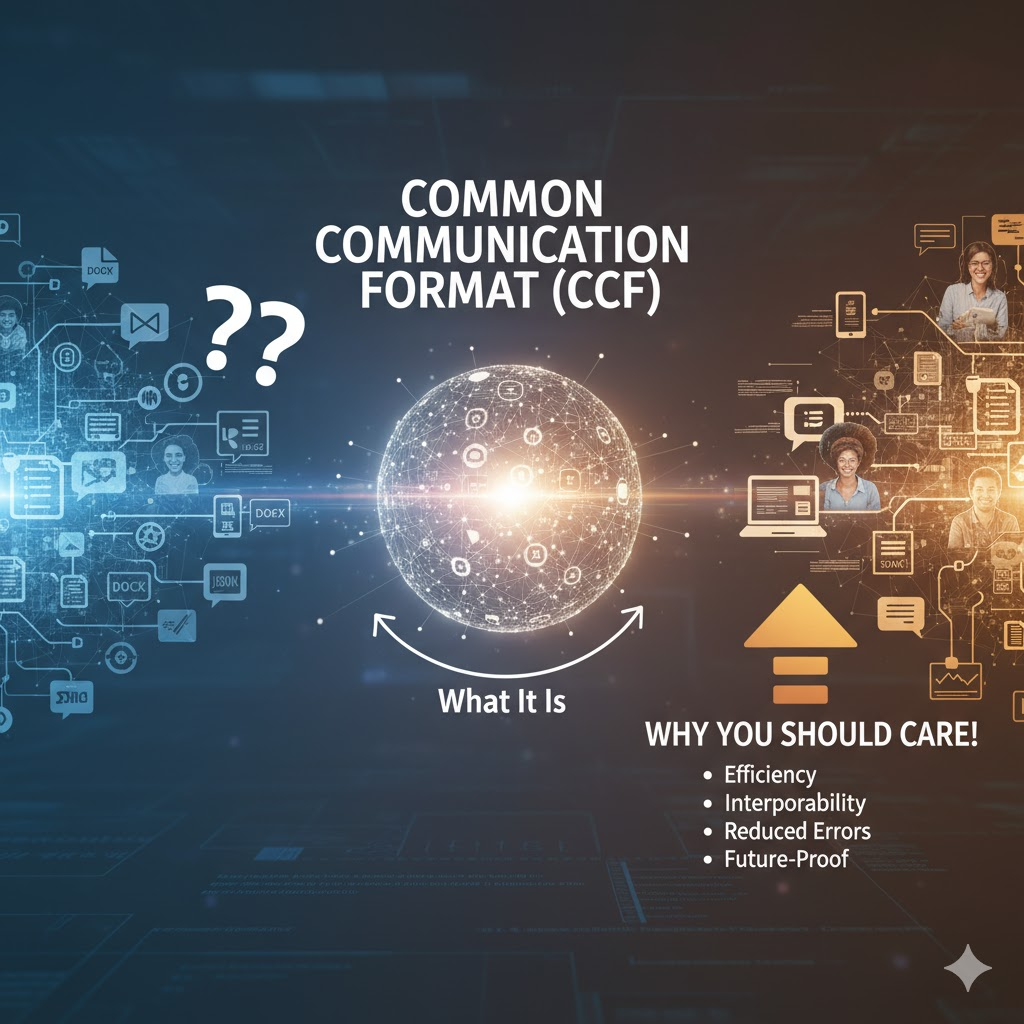
In the vast and complex world of information management, a universal language is essential for communication. For libraries, abstracting services, and databases, that language is the Common Communication Format (CCF). Developed under the auspices of UNESCO, the CCF is not merely a technical specification but a foundational framework that has revolutionized how bibliographic data is shared, understood, and utilized across disparate information systems. It is the unsung hero ensuring that a book cataloged in a university in Tokyo can be accurately and efficiently discovered and processed by a library system in Buenos Aires.
This standardized method for recording and exchanging bibliographic information acts as a critical enabler of global knowledge sharing. By defining a precise set of data elements and their transmission formats, the CCF ensures that information moves consistently and reliably, overcoming the barriers of incompatible software and local cataloging practices. Its development marked a significant step toward true interoperability in the information community.
What Is the Common Communication Format (CCF)?
Think of the CCF as the grammar and vocabulary of library data. Just like English or Spanish has rules for how sentences are formed, the CCF defines how bibliographic information like author names, titles, publication dates, and identifiers should be recorded and exchanged.
Before the CCF, libraries and databases had their own cataloging systems. It was chaos! Each system used different structures, symbols, and rules, making data sharing almost impossible.
The CCF changed all that by introducing a common structure that everyone could follow. Whether a library uses its own cataloging software or a global union catalog, the CCF ensures that data looks and behaves the same everywhere.
So, in short:
-
It’s a standardized format for exchanging bibliographic records.
-
It ensures consistency, accuracy, and interoperability.
-
It acts as a translator between different library and information systems.
Why the CCF Was Created: Solving the Problem of Information Silos
Before the CCF, exchanging bibliographic data was like trying to merge two cookbooks written in different alphabets. Every library had its own way of describing materials. A publication date might be in one field in one system, and in another in a different one.
This made sharing or combining records extremely difficult. Libraries were trapped in information silos, unable to collaborate efficiently.
UNESCO and information scientists saw this problem and decided to act. The goal? To create a universal standard that all libraries could use, no matter their size, language, or technology.
Who Uses the Common Communication Format?
You might be surprised at how many organizations rely on the CCF every single day. Let’s break it down:
1. Libraries
Libraries are the CCF’s biggest fans. They use it to:
-
Exchange catalog records with other libraries
-
Import pre-made records from national or international databases
-
Support interlibrary loans (borrowing books between institutions)
For example, when a university library in London buys a new book, it can import a CCF record from the British Library instead of creating one from scratch. This saves hours of cataloging work and ensures the record is accurate and compatible.
2. Abstracting and Indexing Services
These are the organizations that collect and summarize academic articles like citation indexes and research databases.
They use CCF to:
-
Share structured metadata with libraries and digital archives
-
Integrate their records seamlessly into library catalogs
So, when you search a university database and find both books and journal articles in one place, you can thank the CCF for making that possible.
3. Referral Systems and Knowledge Bases
Beyond libraries, the CCF supports information referral systems databases that list resources, services, and experts.
By using the CCF’s structured approach, these systems can:
-
Maintain consistent directories across organizations
-
Make their data easily searchable and updatable
Essentially, any organization that manages structured information can benefit from the CCF’s standardization.
The Core Purpose of the CCF: Standardization, Interoperability, and Consistency
The inception of the CCF was driven by a clear and pressing need to solve the problem of information silos. Before such standards, exchanging library records was a cumbersome, error-prone process. Each institution might use a slightly different way to record an author’s name, a publication date, or a subject heading.
The CCF addressed this challenge head-on with three primary objectives:
Standardize Data Exchange:
At its heart, the CCF provides a consistent, computer-readable format for bibliographic records. Imagine trying to read a document where every paragraph is in a different language or font; this was the digital equivalent for early library systems. The CCF creates a uniform structure, simplifying the transfer of information between systems that would otherwise be fundamentally incompatible.
Enable Interoperability:
The CCF functions as a diplomatic translator between sovereign nations of data. It allows different systems—be it a proprietary library catalog, a commercial vendor’s database, or a non-profit indexing service—to communicate and share data effectively. This interoperability is the backbone of collaborative projects like union catalogs and international digital libraries.
Promote Data Consistency:
By mandating specific data elements and defining their structure, the CCF inherently reduces errors and inconsistencies. It answers critical questions: How should a corporate author be formatted? What is the exact field for an International Standard Book Number (ISBN)? This rigorous definition ensures that a “title” in one system is understood as a “title” in another, preserving the integrity of the information as it travels.
The Mechanics of CCF: How It Works in Practice
Understanding the technical workings of the CCF reveals its genius. It doesn’t just suggest what data to share; it precisely dictates how to do it.
Data Element Specification:
The CCF begins by specifying the essential building blocks of a bibliographic record. These are the mandatory and optional data elements that must be included for a record to be complete and understandable. This includes familiar elements like author, title, publisher, and publication date, but also extends to more granular details like series statements, physical description (e.g., number of pages), and standard numbers like ISBN or ISSN. This comprehensive checklist ensures no critical piece of information is lost in translation.
Defining the Transmission Format:
Specifying the data is only half the battle. The CCF also rigorously defines the “envelope” in which this data is sent. It outlines a specific transmission format, often implemented using modern markup languages like XML or delimited formats like CSV. This ensures that the receiving system knows exactly how to parse the incoming data stream—where one field ends and the next begins, and how to interpret the relationships between different data elements.
A Framework for System Design:
For software engineers and system designers, the CCF is more than a data format; it is a blueprint. It provides a clear framework for creating and adapting local library management systems and computer programs. By designing their internal procedures to align with the CCF, institutions can effortlessly both export their records for sharing and import records from external sources, future-proofing their systems against evolving technologies and partnerships.
The Ecosystem of CCF Users: Who Relies on This Standard?
The adoption of the Common Communication Format is widespread across the information landscape, creating a networked ecosystem of knowledge sharing.
Libraries:
This is the primary user base. Libraries use the CCF to exchange catalog records with each other, a process fundamental to inter-library loans, collaborative cataloging projects (like consortia), and importing records from national bibliographic agencies. When a library acquires a new book, it can often source a pre-made, high-quality CCF record from a central database, saving immense time and resources.
Abstracting and Indexing Services:
Organizations that compile databases of journal article citations and abstracts rely on the CCF to share their data with libraries and other information agencies. This allows libraries to seamlessly integrate these specialized indexes into their catalogs, providing users with a unified search experience. The consistent format ensures that article metadata from a scientific index can be accurately ingested and displayed alongside book records in a library’s discovery system.
Referral Systems and Knowledge Bases:
Beyond traditional libraries, the CCF is used by information referral systems that provide details about resources, services, and experts. Its structured nature makes it ideal for creating standardized directories and knowledge bases that can be queried and updated by multiple organizations.
CCF in the Modern Digital Age
In an era dominated by complex digital repositories and the semantic web, one might question the relevance of a format developed in the 1980s. However, the principles embedded in the CCF are more critical than ever. While specific implementations may have evolved, the core concepts of standardized data elements, rigorous formatting, and a focus on interoperability are the direct ancestors of modern metadata schemas like Dublin Core and data exchange protocols that power today’s digital libraries and open-access repositories.
The CCF laid the groundwork for a global understanding that for information to be truly free and accessible, it must first be structured and universally understandable. It taught the information community that local efficiency is less important than global compatibility. By providing a common ground, the Common Communication Format has, for decades, quietly empowered the mission of libraries and information centers worldwide: to connect people with the knowledge they seek, irrespective of geographical or technological boundaries. It remains a testament to the power of international cooperation and a foundational pillar of our global information infrastructure.
Why the Common Communication Format Still Matters
Let’s face it: information chaos is real. Every day, we generate enormous amounts of data, but if that data isn’t structured or shareable, it’s almost useless.
The Common Communication Format reminds us that true progress doesn’t come from hoarding information it comes from sharing it intelligently.
Here’s why it still matters:
-
It’s the foundation of modern library data exchange.
-
It promotes global collaboration in research and education.
-
It ensures accuracy and consistency, no matter how large or diverse the data set.
-
It continues to inspire modern metadata systems used worldwide.
The CCF proved that the world’s knowledge systems could work together and that cooperation, not competition, is the key to accessible information.
Conclusion: The Universal Language of Knowledge
The Common Communication Format isn’t just a technical tool it’s a story about how cooperation can overcome complexity.
By giving the world a shared bibliographic language, UNESCO and the information community laid the foundation for today’s connected knowledge ecosystem.
It’s what allows:
-
A librarian in Paris to read data from Tokyo.
-
A student in Nairobi to access a catalog from New York.
-
A global network of libraries to operate as one unified system.
In a world where data is the new currency, the CCF ensures that information remains structured, consistent, and universally understood. It’s the silent bridge that connects ideas across borders a true champion of open, global knowledge.
For More Information Visit itmanagement4u!